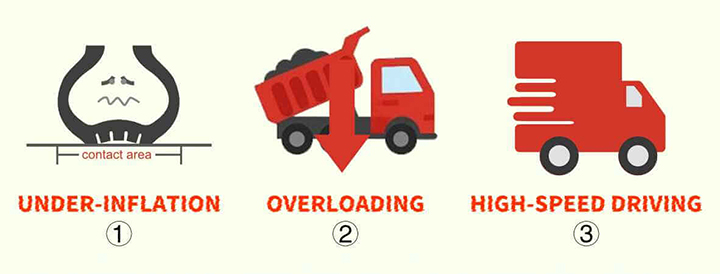
1. Under-Inflation
The most common cause.
A tyre with low pressure flexes more → this movement generates excessive heat.
Under-inflation of just 10–15% can increase tyre temperature by 15–30°C.
2. Overloading
If the truck carries more weight than the tyre’s load index, it creates more surface friction and internal stress.
The shoulder area bears the brunt → leading to delamination or belt separation.
3. High-Speed Driving
Constant high-speed driving, especially in hot climates, increases the rotation rate and friction → faster heat build-up.
Even premium tyres degrade if operated continuously at high temperatures.
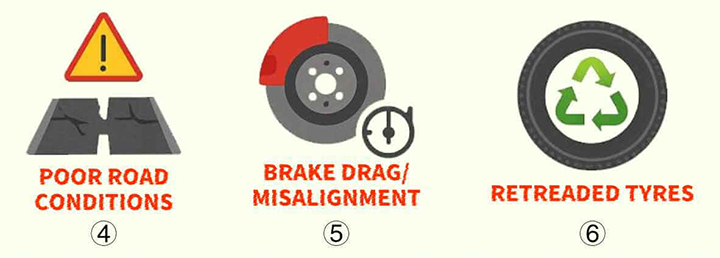
4. Poor Road Conditions
Bumpy or uneven roads cause the tyre to compress and decompress more frequently.
These rapid deflections generate mechanical and thermal stress, especially on the sidewall and shoulder area.
5. Brake Drag / Misalignment
Dragging brakes or misaligned axles increase friction → leading to localized heat zones on the tyre.
This causes spot damage or scalloping, eventually leading to casing failure.
6. Retreaded Tyres
Retreads generally have higher operating temperatures than new tyres due to different compound layers and bonding quality.
Heat buildup can be higher if casing isn’t properly inspected before retreading.
Signs of Tyre Overheating:
Unusual smell (burnt rubber)
Tread warping or softening
Tyre bulge or shoulder blistering
Cracking or melting at shoulder or sidewall
Increased air pressure (due to hot air expansion)
Frequent tyre failures on long-haul trips
Consequences of Overheating:
Tread/Belt Separation
Tyre blowout
Premature wear
Decreased retreadability
Damage to vehicle suspension/brakes
How to Prevent Overheating in TBR Tyres:
✔️ Maintain Correct Tyre Pressure
Check tyre pressure daily or before long routes.
Use TPMS (Tyre Pressure Monitoring System) where possible.
✔️ Avoid Overloading
Respect the load index and ply rating of the tyre.
Spread weight evenly across axles.
✔️ Drive at Recommended Speeds
Don’t exceed the tyre’s speed rating.
On hot days, reduce speed if fully loaded.
✔️ Use High-Quality Tyres
Choose tyres with advanced heat-dissipating compounds, especially in hot or mountainous regions.
✔️ Rest Periods on Long Hauls
Give tyres a cool-down break every 2–3 hours in high-heat environments.
✔️ Routine Tyre Inspection
Look for wear patterns, bubbles, cuts, and sidewall damage.
Inspect for brake drag, hub overheating, or alignment issues.
Technical Fact:
Tyre tread rubber begins to oxidize and harden at sustained temperatures above 100°C. At 120°C+, chemical bonds inside the compound start to break down, accelerating separation and failure.